

Skip to content
Teralvio Technologies, homeTeralvio Technologies, home

Artificial intelligence and automation for businesses

Artificial intelligence can cut down repetitive work, improve demand forecasts or give your teams quick access to information. Teralvio starts from a specific business problem, checks that your data can answer it, then starts with the use case that will save the most time.

  • Start with the task that costs your teams the most time
  • Plug AI into your data and systems, not next to them
Discuss your project
A person writing code on a laptop.

AI strategy

You hear about AI everywhere, but you don’t know which projects are worth pursuing in your business. In a workshop with your managers, we identify the tasks and decisions where AI can help, estimate the possible gain and check that the data you need exists.

You leave with a roadmap, a clearly scoped first project and guidelines for how your employees use AI.

  • Identifying and prioritizing use cases
  • Estimating the gain for each project
  • Guidelines for using AI at work
  • Risk management and Law 25 requirements

Two people talk near a large window.

Machine learning model development

We build models suited to your needs: forecasting sales, demand or volumes, scoring a risk such as a customer leaving, detecting anomalies, segmenting your customers or recommending products. For example: forecasting next week’s demand, by product, from your sales history.

Our work covers data preparation, training, evaluation and integration of the model into your tools. The model is validated on data it has never seen and compared with your current method, and its limits of use are documented.

  • A business problem and defined success criteria
  • Data prepared for training
  • A model compared with a baseline method
  • A documented evaluation, with its limits
  • Integration into your existing tools
  • Monitoring after deployment
A laptop shows code while a person checks their phone.

Generative AI assistants

A generative AI assistant answers your employees’ questions from your own documents: policies, procedures, technical sheets. Its answers cite the source they come from.

The assistant respects existing access rights and can be offered in your collaboration tools, your intranet or your website.

  • Answers that cite their sources
  • Document permissions respected
Hands typing on a laptop keyboard.

AI agents

Some tasks take several steps across different systems, such as looking up a customer’s file, preparing a quote or opening a support ticket. An AI agent can carry out this kind of task using your tools.

Its access is limited to what it needs and its actions are logged. Sensitive steps, such as sending something to a customer or posting an accounting entry, wait for a person’s approval.

Two computer screens on a desk, next to a plant.

Intelligent document processing

You receive invoices, purchase orders or forms every day that someone has to read and key in by hand. We automate that reading: the system sorts the documents, extracts the information you need and sends it to your business systems.

  • Invoices, purchase orders and forms
  • Sorting of incoming documents
  • Extraction of the fields you need
  • Uncertain cases set aside
A person takes notes during a meeting, next to a laptop.

Process automation

Emails to sort, data to copy from one application to another, a report to rebuild every Monday. These tasks keep your teams busy without adding much. We automate them with workflows, and with AI when the task means reading or understanding text.

Approval requests, data exchanges and recurring reports are routed automatically. Decisions that need human sign-off stay with the people responsible for them.

Hands type on a tablet with a keyboard, seen from above.

AI evaluation and improvement

Before you hand an assistant or an agent to your teams, you need to know that it gets things right. We test it on questions and scenarios drawn from your real work, with the expected answers and the cases where it should say it doesn’t have the information.

We measure the quality of the answers, check the sources and the actions carried out, then fix what needs fixing. The same tests are run again at every update, so versions can be compared.

  • Reference questions and scenarios
  • Accuracy of answers and sources
  • Checks on agent actions and access rights
  • Steps that require human sign-off
  • Tracking of errors, feedback, response times and costs
A person working on a laptop by a window.

AI deployment and monitoring (MLOps)

A useful AI solution has to work every day, not just during the demo. We deploy models in batch or through an API and track the quality of their predictions. For an assistant, its sources are kept up to date and its answers checked over time.

We monitor prediction quality and how the data changes. When quality drops, we analyse the causes and decide on the fixes needed. Any retrained model is evaluated and approved before it replaces the version in production.

  • Version management and approval before replacement
  • Performance and drift monitoring
  • Up-to-date sources for assistants
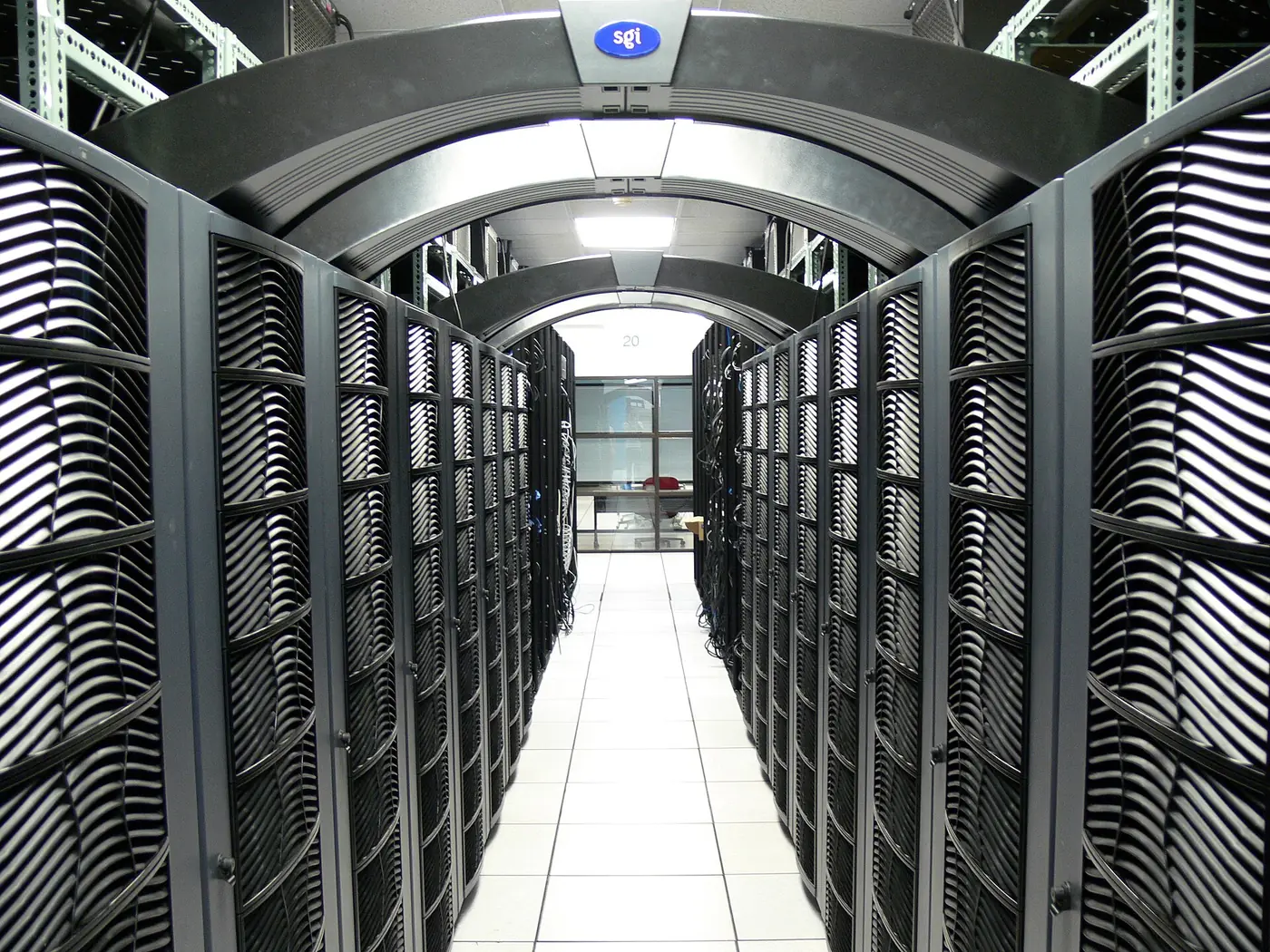
An aisle between server racks in a data centre.
Training

Training and support for your teams

We help your teams use data and AI in their day-to-day work. Workshops are tailored to their responsibilities and their tools, with hands-on exercises, practical guides and support as they get started.

  • Executives and managers

    Spot the right use cases, prioritize investments and track the benefits.

  • Business teams

    Use dashboards and assistants, check the results and understand their limits.

  • Data owners and stewards

    Define metrics, manage quality and take on their role as data owners or stewards.

  • Technical teams

    Run, maintain and evolve the solutions delivered.

Why work with us on your AI projects

  • We measure the gain, before and after

    The current situation is measured before the project, then compared with the result once the solution is in production.

  • Your data comes before the model

    An AI project starts when the data it needs exists and is usable. If not, we start with the data.

  • The code and models stay with you

    We work in your environment, and what we build for you under the engagement belongs to you.

Frequently asked questions

Questions about AI in business

Discuss your project
Do we have enough data to build a model?

It depends on the problem. A demand forecast usually needs a history that covers several seasons. We check this during scoping, before any development.

What is the difference between an assistant and an AI agent?

An assistant answers questions. An agent carries out a task, such as looking things up in your systems, preparing a document or opening a request. Its access is limited to what it needs, and a person approves any step with consequences for your business.

Do our documents stay confidential?

Yes. Our assistants respect your documents’ access rights and run in your cloud environment. We choose services that do not train their models on your data.

How do we know whether the model beats our current method?

The project starts by measuring the current situation and running a short proof of concept. The model is then compared with your method on the same data.

Which tools do you work with?

The ones that suit your environment. Where possible, we work on the platform you already use, with commercial AI services or open models, depending on your needs and your confidentiality requirements.

Contact us

Talk to an expert about your project

A 30-minute call, with no commitment. You describe the situation, we tell you where we would start.

Customize consent preferences

We use cookies and your browser’s storage to help you navigate and to run certain features. You will find the details of each category below.

Always active

These items are needed for the site to work. They contain no information that identifies you.

Lets you use SofIA, our AI assistant: your questions are sent to our AI provider to produce the answers.

Would help us understand how visitors use the site, such as the number of visits and the pages viewed.

Would help measure the effectiveness of advertising campaigns.